Overview
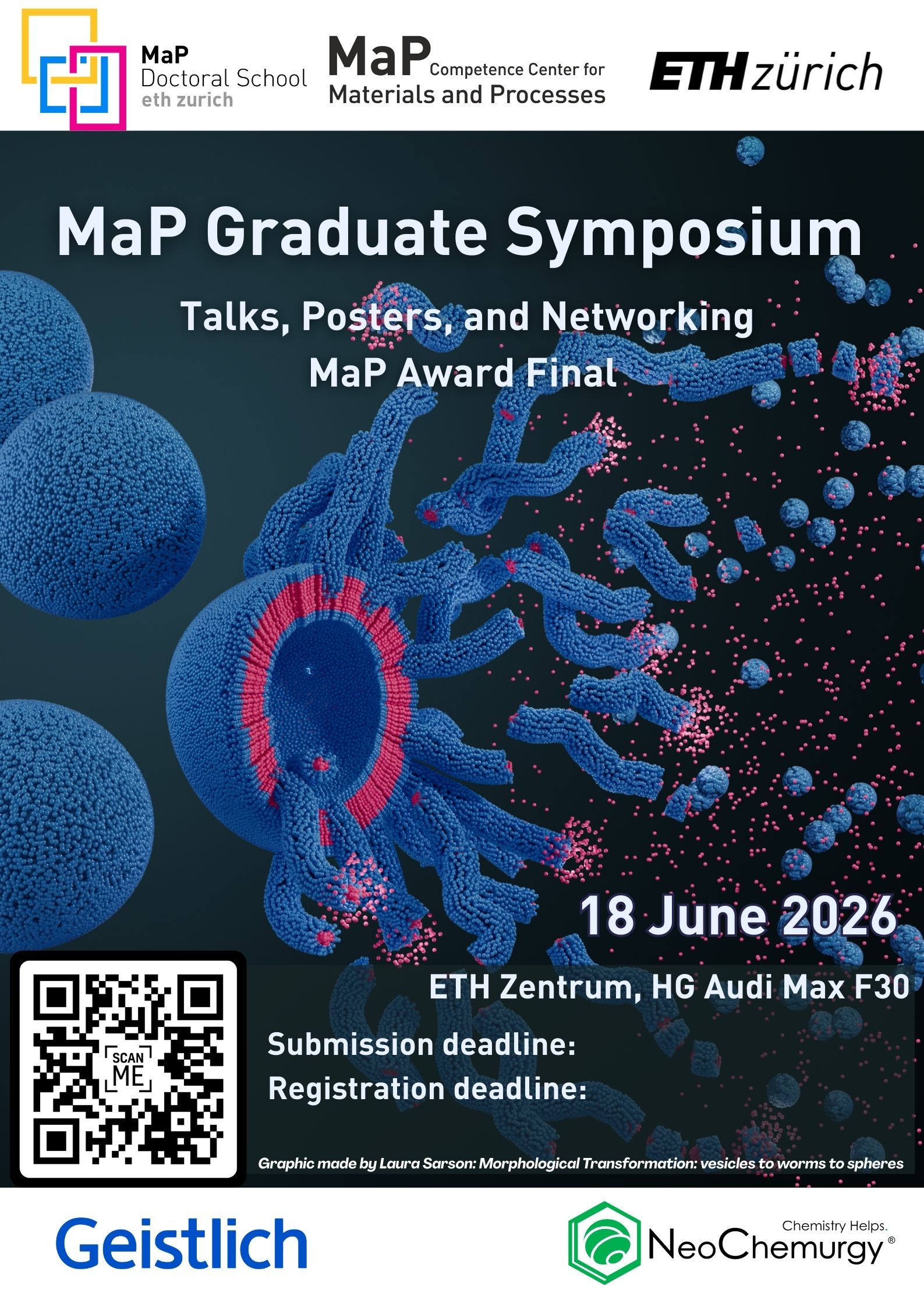
I worked with Dr. Nethmi De Alwis and Dimitra Mantara of the Anastasaki Group of the Materials Department (ETH Zürich) to create an animation, and 3D images, which was then selected as the poster image to advertise the 2026 MaP Symposium.
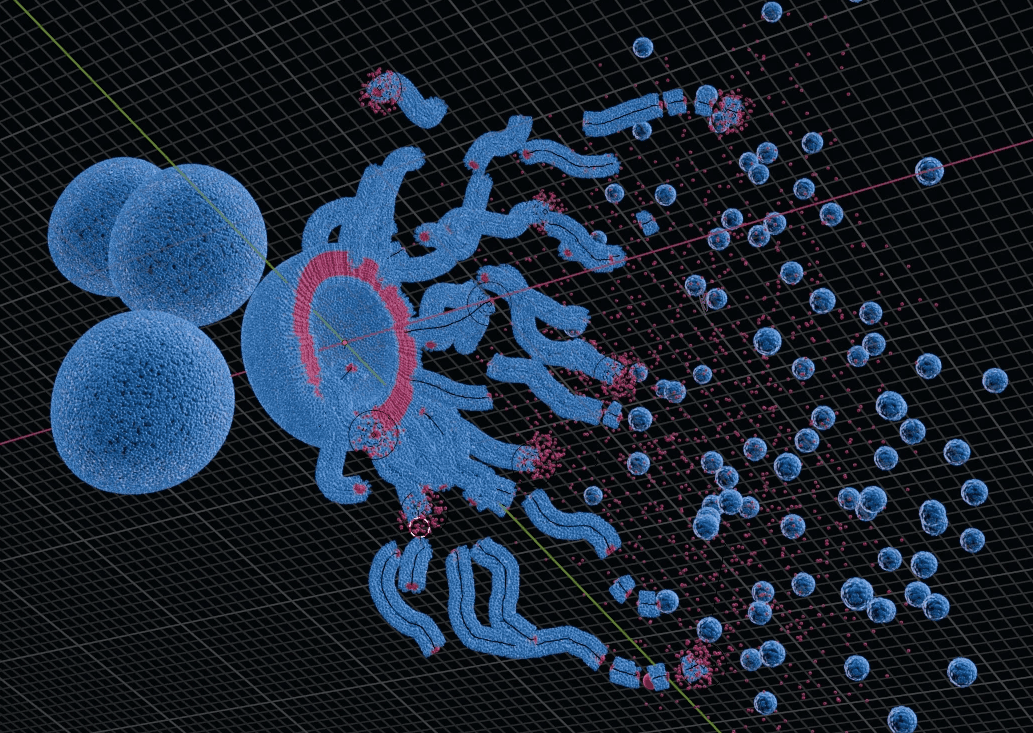
This project involved visualizing work from a paper showing that polymer morphologies, normally formed through polymerization, can also be produced in reverse through depolymerization. Creating morphologies out of polymers is useful for applications as diverse as drug delivery, viscosity modification and cell culture.
“It was a pleasure working with Laura; she has a great ability to translate complex scientific concepts into clear and engaging visuals. Her work on the DIMT project was both elegant and highly effective in communicating the key ideas. Turning a science project into an animation is not easy, but Laura has truly mastered it. I would highly recommend her for your next science project.”
Dr. De Alwis - ETH D-MATL
“It was a pleasure working with Laura; she has a great ability to translate complex scientific concepts into clear and engaging visuals. Her work on the DIMT project was both elegant and highly effective in communicating the key ideas. Turning a science project into an animation is not easy, but Laura has truly mastered it. I would highly recommend her for your next science project.”
Dr. De Alwis - ETH D-MATL
“It was a pleasure working with Laura; she has a great ability to translate complex scientific concepts into clear and engaging visuals. Her work on the DIMT project was both elegant and highly effective in communicating the key ideas. Turning a science project into an animation is not easy, but Laura has truly mastered it. I would highly recommend her for your next science project.”
Dr. De Alwis - ETH D-MATL
Deliverables
A set of images to be used for conference presentations, showing the individual structures.
A short animation showing how the structures transform as polymer chains shorten.
Scientific Background
The system consists of amphiphilic polymers made from two types of monomers: hydrophilic (water-loving) and hydrophobic (water-repelling).
Each polymer chain contains a fixed number of hydrophilic monomers and a variable number of hydrophobic monomers. Because the polymers exist in an aqueous solution, the hydrophobic sections organize themselves to avoid water and instead cluster together.
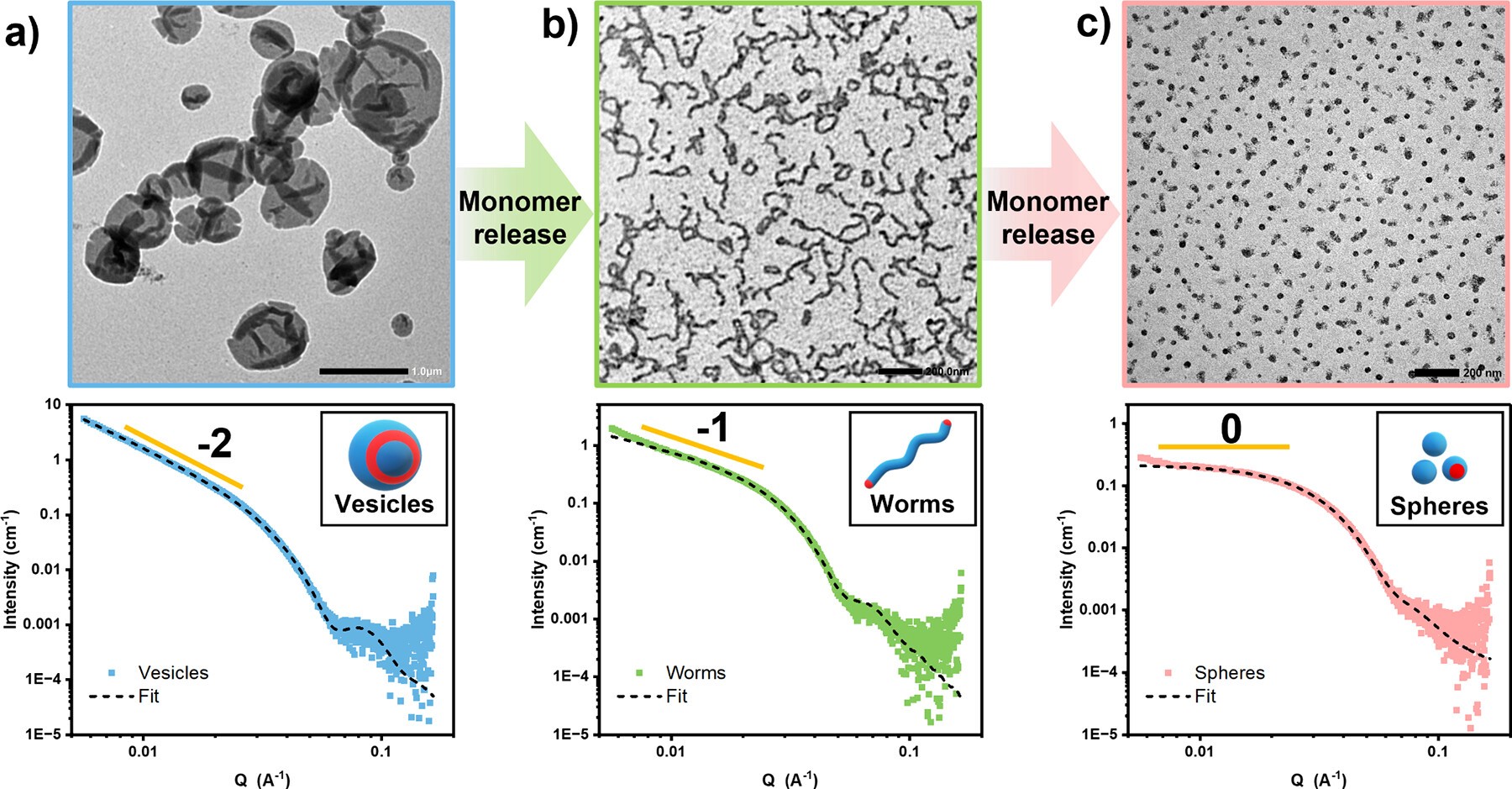
As depolymerization removes hydrophobic monomers from the chains, the assemblies reorganize into different morphologies.
The structures observed in the study were:
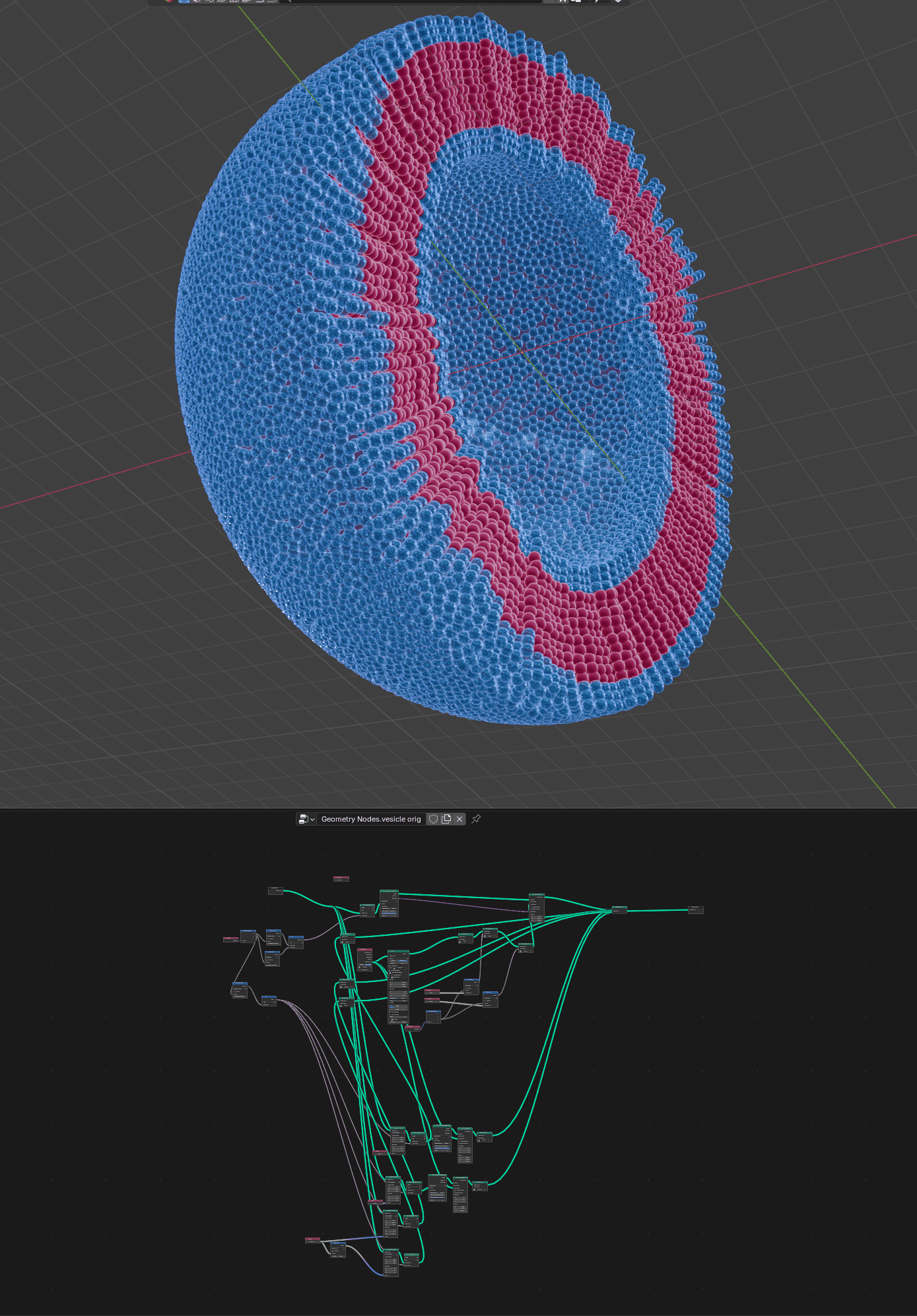
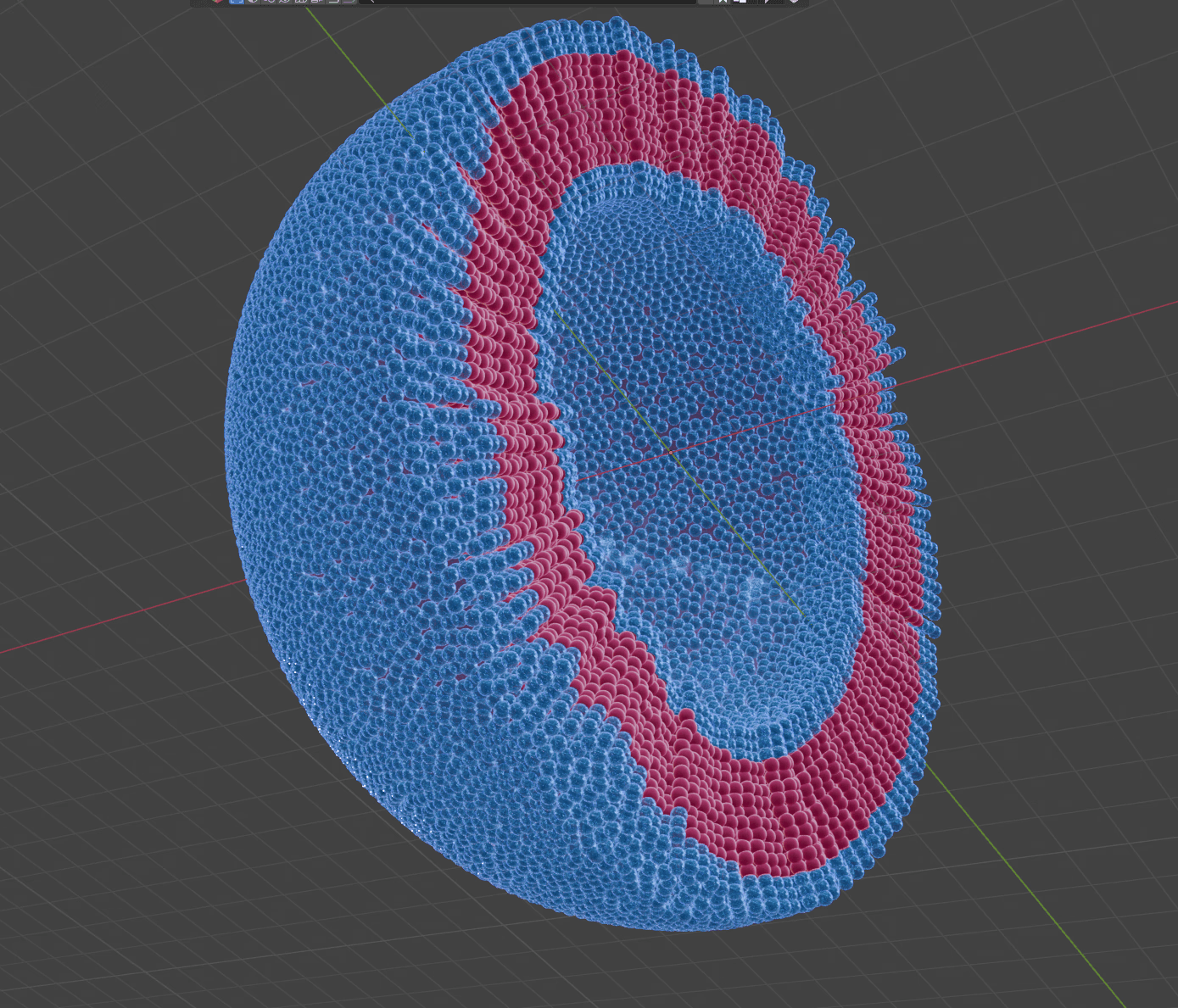
Vesicle
Vesicle to worm
Worm
Sphere
Each morphology corresponds to progressively shorter polymer chains. When hydrophobic monomers detach from the polymers, they disperse into the surrounding solution.
The structures observed in the study were:
Vesicle
Vesicle to worm
Worm
Sphere
Each morphology corresponds to progressively shorter polymer chains. When hydrophobic monomers detach from the polymers, they disperse into the surrounding solution.
The structures observed in the study were:
Vesicle
Vesicle to worm
Worm
Sphere
Each morphology corresponds to progressively shorter polymer chains. When hydrophobic monomers detach from the polymers, they disperse into the surrounding solution.
Visual Communication Challenge
The main challenge was to represent large self-assembled structures while still showing the individual monomers that make up the polymers.
In reality, polymer chains may contain thousands of monomers. If represented at true scale, the polymers would appear as smooth strings and an important concept would be lost: the fixed number of hydrophilic monomers within each chain.
The visuals therefore needed to balance scientific clarity, structural realism, and computational feasibility while keeping the composition visually readable.
Software and Technical Approach
I chose Blender for this project because of its strong tools for procedural modeling and animation. The structures were built using geometry nodes, which allowed me to create procedural systems for generating and animating the polymer assemblies.
This approach made it possible to build complex morphologies while maintaining control over polymer length, distribution, and animation behaviour.
Building the Polymer Chains
The first step was constructing the polymer chains.
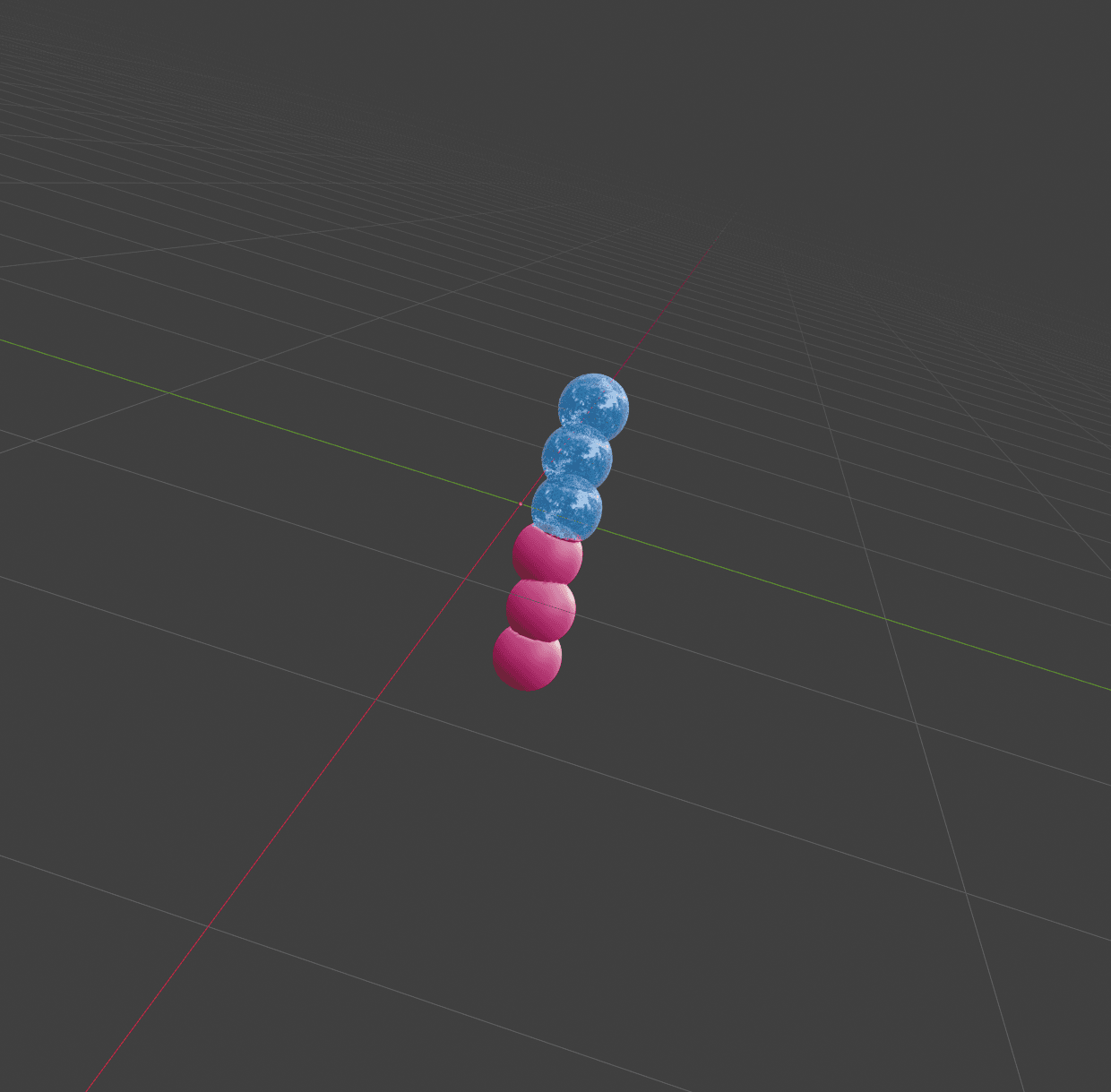
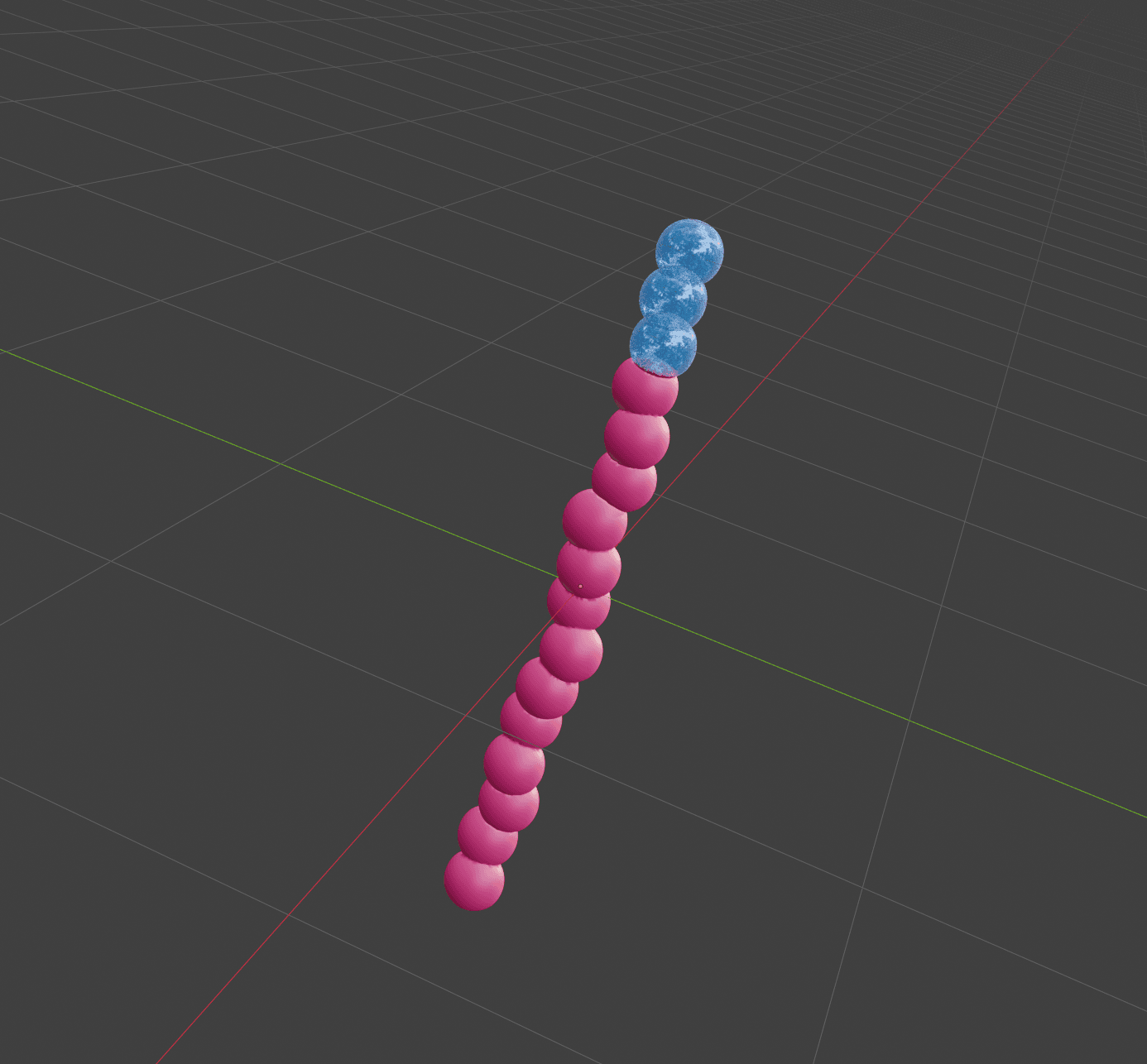
Each monomer was represented as a sphere so that the viewer could easily identify the structure of the polymers without unnecessary visual complexity. Separate base elements were created for hydrophilic and hydrophobic monomers.
These monomers were then distributed along curves to generate polymer chains of different lengths, which could be reused across the different morphologies.
Constructing the Vesicle
I began with the vesicle, which was the most complex structure in the system.
The vesicle consists of two spherical layers of polymers arranged so that hydrophobic monomers are shielded from the aqueous environment.
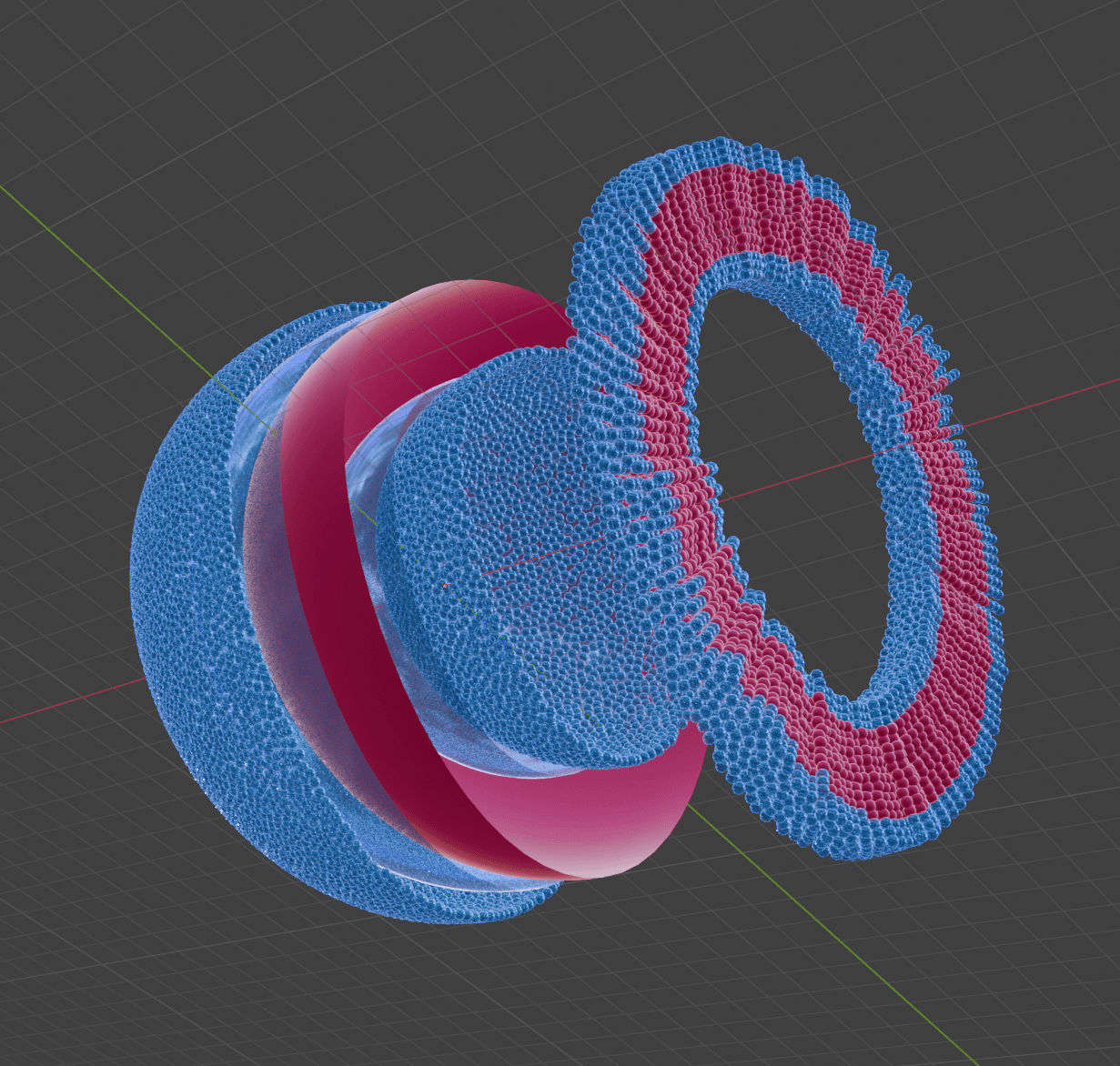
Because the number of polymers required made the structure computationally heavy, I developed a hybrid model made from several components: areas where polymers are fully visible, simplified shell sections, and surface-distributed monomers that maintain the appearance of density.
This allowed the vesicle to appear large and detailed while still remaining manageable for rendering.
I also explored using shader-based textures to simulate the surface pattern, but these lacked the depth and physical presence created by real geometry.
Constructing the Vesicle
I began with the vesicle, which was the most complex structure in the system.
The vesicle consists of two spherical layers of polymers arranged so that hydrophobic monomers are shielded from the aqueous environment.
Because the number of polymers required made the structure computationally heavy, I developed a hybrid model made from several components: areas where polymers are fully visible, simplified shell sections, and surface-distributed monomers that maintain the appearance of density.
This allowed the vesicle to appear large and detailed while still remaining manageable for rendering.
I also explored using shader-based textures to simulate the surface pattern, but these lacked the depth and physical presence created by real geometry.
Generating Worms and Spheres
Once the vesicle system was established, the worm and sphere morphologies were more straightforward to construct.
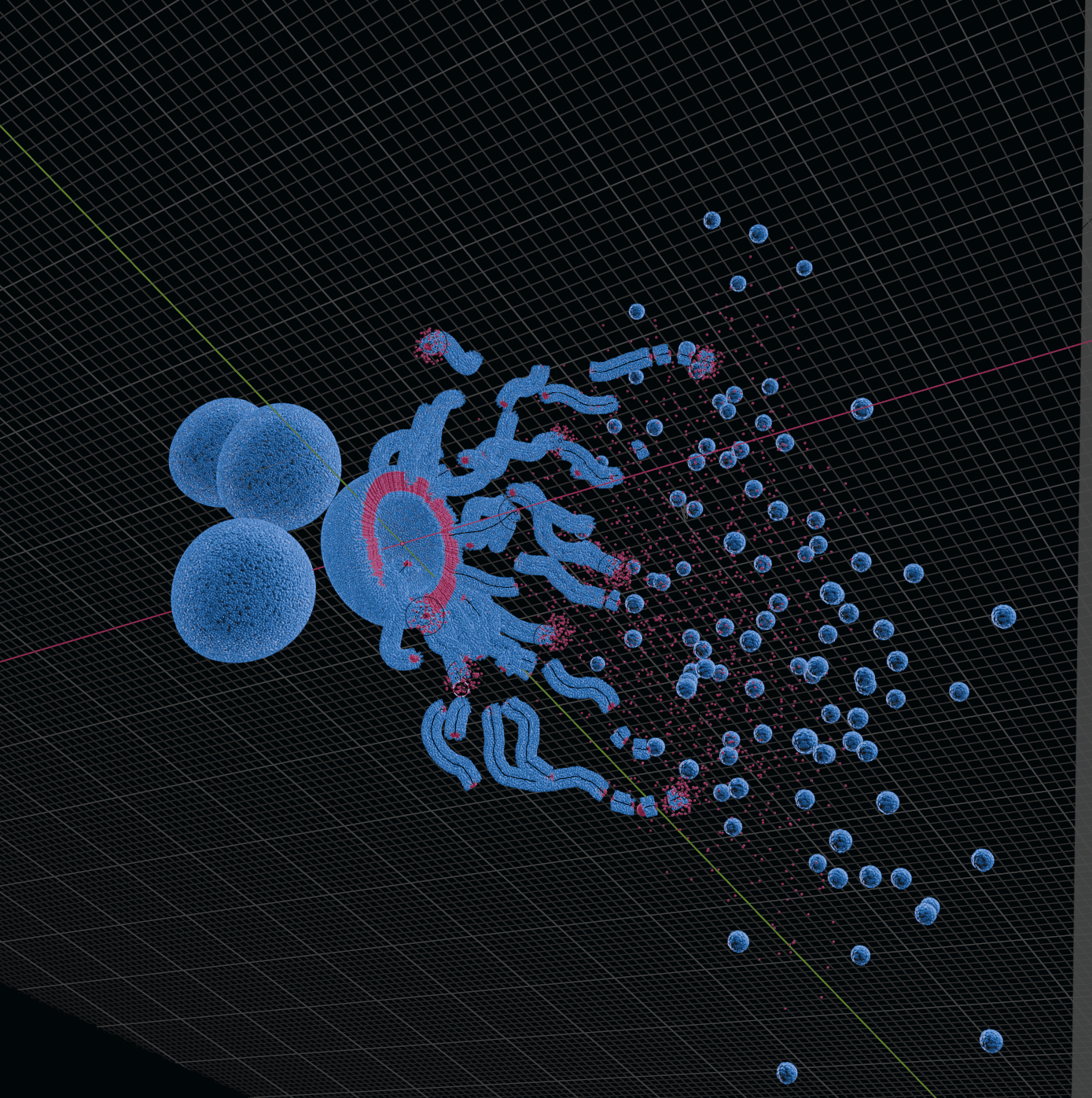
Using photographs of the experimental structures as reference, I built a geometry nodes tool that allowed me to draw worm-like assemblies using grease pencil curves. This provided precise control over the curvature and placement of the structures.
Spheres were generated using the same polymer construction logic, but arranged radially around a central point.
Scene Composition
The final composition needed to clearly communicate the sequence of morphology changes.
Because the structures varied significantly in scale, I arranged them in depth: vesicles positioned further from the camera, worms in the mid-ground, and spheres closer to the viewer.
Lighting was used to highlight the release of hydrophobic monomers as the worm structures break down into smaller assemblies. This helped guide the viewer’s eye through the transformation process.
Animation Strategy
The animation focuses on the transition between morphologies.
Because the full structures were computationally heavy, the animation uses smaller assemblies to demonstrate the transformations clearly.
For the worm-to-sphere transition, I began with a sphere and flattened it along one dimension, allowing it to extend into a worm-like form. The process could then be reversed to collapse the structure back into a sphere.
The vesicle-to-worm transition used a similar approach. Flattened elements were integrated into the vesicle surface and aligned so that their polymers pointed outward. An animated curve was then used to grow the worm structure out of the vesicle.
Camera movement and lighting were choreographed to guide the viewer smoothly through the microscopic environment.
Poster Design for the MAP Symposium
After sharing the initial visuals with the group, I was invited to design the poster for the MAP Symposium at ETH Zürich.
There was some competition for the poster design, including a submission from another research group whose background image had previously won a departmental photography prize.
After meeting with the team to discuss improvements to the colour scheme, layout, lighting, and overall composition, I revised the design and resubmitted it.
The final poster was selected as the winning design.
Reflection
This project combined scientific interpretation, procedural 3D modeling, and visual storytelling. It was an opportunity to translate complex material science concepts into visuals that could communicate clearly both within the research community and to broader audiences.